
Project JellyResponse
Student led SeaPerch innovation for inspection and recovery.
Project JellyResponse takes SeaPerch skills out of the pool and into real life. We practice dock and marina inspections, underwater debris response, and storm response inspired service that connects engineering to real community needs on the Texas Gulf Coast.
Nolan Note: Visibility changes everything, test in different water conditions so your ROV stays controllable when the water is not clear.
Why It Matters
We live on the Texas Gulf Coast, which means storm season is not a maybe, it is a reality. We have seen firsthand how hurricanes and major storms can hit hard, physically and financially, and how long recovery can take for coastal communities.
After severe weather, damage and debris are often hidden below the surface. Docks can shift, structures can weaken, hazards can appear, and the people who rely on these waterways may not see the danger until it becomes a problem. Project JellyResponse teaches students to use engineering with purpose, document what they observe, and show up for their community in a way that matters.
Impact includes:
-
Safer waterways through careful observation and responsible reporting
-
Students building real world skills through service, data, and teamwork
-
Young engineers learning that innovation is not just building, it is helping
How It Started
Project JellyResponse was created as PB & Jellyfish’s 2026 SeaPerch Real World Innovation project brought to life through community based action, but it started with research and a question that would not leave us alone.
While working on our Technical Design Report, we came across multiple articles and reports that discussed the true cost communities face after major storms. The cost is not just financial. It is physical damage, lost access to services, disrupted businesses, safety hazards, and the mental and emotional toll that storm recovery can create for families and entire coastal communities.
That research led us to a bigger question, how could we help reduce those costs before they happen?
Project JellyResponse became our answer. We focused on inspection, recovery readiness, and debris response inspired service, especially for docks, marinas, and coastal infrastructure that can become dangerous or unusable after severe weather.
To make this project real, not just an idea, our ROV went through extensive redesign and testing. JellyStorm was developed through multiple prototypes as we tested stability, control, visibility, and task readiness in conditions that reflect the challenges of working near coastal waterways. Every change was driven by purpose and data, because in real world response work, predictable performance matters.
JellyResponse is SeaPerch innovation with a mission, students using engineering skills to serve, protect, and strengthen the communities we call home.
What We Do
Project JellyResponse may include:
-
Dock and marina inspections using an ROV to observe underwater conditions
-
Underwater debris identification and response support when appropriate
-
Storm response inspired service events focused on recovery and safety awareness
-
Documentation of observations using photos, notes, and clear reporting practices
-
Student training on safe practices, teamwork, communication, and data collection
-
Collaboration with community partners when requests align with safety and mission
Who We Serve
Project JellyResponse supports:
-
Students building real world engineering skills through service
-
Coastal communities and waterways impacted by storm season
-
Teams and educators who want meaningful projects with visible impact
Connected Projects
Project JellyResponse connects with:
-
Project JellyClean for shoreline and surface cleanup efforts during service events
-
Project JellyConnect for mentorship and troubleshooting support
-
Project JellyUnite for training, documentation support, and shared learning
Photos and Highlights
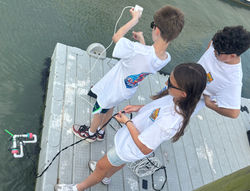
A few moments from Project JellyResponse. We are still building this gallery, so if you have photos from a Project JellyResponse event, workshop, or team activity, please email them to info@seaperchfoundation.org and include the project name and event date in the subject line.
Project JellyResponse
 |  |  |
|---|---|---|
 |  |  |
 |  |  |
By sending photos, you confirm you have permission to share them and that they may be used on our website and social media.
By sending photos, you confirm you have permission to share them and that they may be used on our website and social media.
Advice, Tips and Tricks From Around the World
This section is where teams share the small things that make a big difference, what worked, what surprised them, and what they wish they knew sooner. Tips are specific actions you can try right away. Tricks are small hacks that save time or reduce mistakes. Advice is the bigger direction that helps teams make good decisions over the whole season.
From Our Junior Board
Nolan, tip: Do a slow test pass first. A controlled sweep gives clearer footage and better observations than speeding around like a caffeinated torpedo.
Nolan, tip: Visibility is a variable. Test in clear water and murky water so your piloting stays stable when conditions change.
Nolan, trick: Use a simple inspection grid. Pick a start point, go straight for a set distance, shift over, then return. It keeps coverage consistent and prevents missed areas.
Nolan, advice: Document like a scientist, time, location, approach direction, what you saw, and what might have caused it. Video helps, but notes make it usable.
Brooklynn, tip: Assign roles before you start, pilot, Co-Pilot*, Documentation Engineer**, and one person to manage supplies and safety on deck. Clear jobs keep the event calm and safe.
Brooklynn, trick: Use a checklist for every inspection. Battery charged, GoPro recording, notes ready, safety rules reviewed, then launch. Less chaos, better results.
Brooklynn, advice: Keep your voice calm and your directions clear. Calm teams see more, catch more, and make better decisions.
Julian, tip: Pilot slow enough that your eyes can actually process what you are seeing. Fast is fun, but inspections are about noticing details.
Julian, advice: Talk like a team. Short callouts, “stop,” “hold,” “rotate,” “back up,” then move. Good communication beats panic every time.
* Co-Pilot is the tether manager. The Co Pilot manages tether slack, helps prevent snags, and supports the pilot with clear, calm callouts.
** Documentation Engineer focuses on notes, observations, and organized documentation during inspection work. Role titles and detailed job descriptions, including documentation and control roles, will be provided in the Resources section.
From Around the World
Response project organizers, safety tip: Have one to two Safety Supervisors in bright shirts. Make them easy to spot so they can watch the waterline, manage the group, and stop unsafe behavior fast.
Coastal community volunteers, trick: Bring a clipboard and a simple map, even a hand drawn one. Mark where observations happened so you can describe it clearly later.
Mentors supporting response style projects, advice: Safety first. Focus on observation and documentation. Avoid risky recovery actions and work within event rules and supervision.