
Project JellyClean
Student led environmental stewardship through service and action
Project JellyClean empowers students to care for their waterways and communities through cleanups, service projects, and hands on environmental responsibility. From shoreline work to surface debris removal, students learn that real impact starts close to home.
Brooklynn Note: Bring a friend and take pride in small wins. One bag of trash doesn't look huge, but a group cleaning together changes a place fast.
Why It Matters
Healthy waterways matter, for wildlife, for safe recreation, and for the communities that live and work around them. When trash and debris build up, it affects the environment and the people who rely on these spaces every day. Students do not need to wait until they are adults to make a difference, they can lead service and stewardship now.
Living near the Texas Gulf Coast means our waterways are part of everyday life, and they matter. When debris builds up, it affects wildlife, safety, and the pride people feel in their own community spaces. Project JellyClean gives students a way to protect what they love and lead with action.
Project JellyClean gives students a way to use teamwork and engineering thinking to serve their communities in a visible, meaningful way.
Impact includes:
-
Cleaner waterways and public spaces through student led service
-
Stronger community pride and responsibility through action
-
Real world learning as students plan, organize, and lead projects
How It Started
Project JellyClean began with PB & Jellyfish doing cleanup work around a neighborhood lake during the 2025 SeaPerch season. As they worked, they noticed something they could not ignore, the water’s surface needed cleanup too.
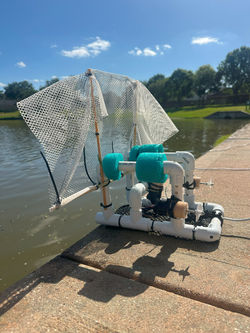
That was the moment engineering clicked. The team realized they could do more than pick up trash, they could design a solution that helps remove it. JellyBot’s netting system was built to make cleanup safer, faster, and more effective, and it turned one small lake cleanup into a growing community movement.
So they engineered a solution. The team designed their ROV, JellyBot, with a netting system that could be driven across the lake to collect and remove surface debris. Then they took it a step further by posting in their neighborhood Facebook group, organizing a local community cleanup, and demonstrating JellyBot in action.
From there, the project grew quickly. The students created flyers and shared them with schools, churches, and local businesses to organize larger community JellyClean events. Today, Project JellyClean has expanded beyond one lake into cleanup events across Brazoria, Fort Bend, Harris, and Galveston Counties in Texas.
What We Do
Project JellyClean may include:
-
Lake, bayou, and beach cleanup events
-
Shoreline and surface debris removal efforts
-
Student led service projects that support local waterways
-
Community partnerships that expand impact and participation
-
Education and outreach that encourages ongoing stewardship
-
Engineering inspired solutions that improve cleanup coverage and safety
Who We Serve
Project JellyClean supports:
-
Students learning leadership through service
-
Local communities who benefit from cleaner waterways and public spaces
-
Teams that want meaningful outreach tied to STEM and responsibility
Connected Projects
Project JellyClean connects with:
-
Project JellyResponse for storm response inspired service and debris focused work
-
Project JellyLaunch when cleanup events inspire new teams and programs to get started through service and community involvement
Photos and Highlights
A few moments from Project JellyClean. We are still building this gallery, so if you have photos from a Project JellyClean event, workshop, or team activity, please email them to info@seaperchfoundation.org and include the project name and event date in the subject line.
Project JellyClean
 |  |  |
|---|---|---|
 |  |  |
 |
By sending photos, you confirm you have permission to share them and that they may be used on our website and social media.
By sending photos, you confirm you have permission to share them and that they may be used on our website and social media.
Advice, Tips and Tricks From Around the World
This section is where teams share the small things that make a big difference, what worked, what surprised them, and what they wish they knew sooner. Tips are specific actions you can try right away. Tricks are small hacks that save time or reduce mistakes. Advice is the bigger direction that helps teams make good decisions over the whole season.
From Our Junior Board
Nolan, tip: Start at the downwind edge. Wind and surface current push floating trash into the same zones, which means you can catch more by cleaning smarter, not harder.
Nolan, tip: Work the shoreline like a sweep pattern. Start on one side, move in sections, and do not zigzag like a confused jellyfish. Straight lines win.
Nolan, trick: Keep two bags going, one for light floaters and one for heavy or sharp stuff. Mixing them is how you get a surprise rip, and nobody wants “trash confetti.”
Nolan, advice: Treat every cleanup like an experiment. Pick a start point, record how many bags you filled, and write down what you would change next time. Next event gets better because you learned, not because you guessed.
Brooklynn, tip: Assign roles before you start, bag runner, grabber team, water and supply check, photo person. Calm teams get more done, and nobody feels lost.
Brooklynn, advice: Take before and after photos from the same spot. It proves impact in one second and makes people want to come back.
Julian, tip: Hype matters. Celebrate every full trash bag like it is the win that it is. Energy keeps volunteers moving and makes kids feel proud of what they are doing.
Julian, tip: Wear closed toe shoes and sunscreen (even if it is cloudy). Nobody wants to leave a cleanup as a new team mascot, The Lobster.
Julian, advice: Give younger kids a job they can own, even if it is small. Belonging is built when people feel useful.
From Around the World
Community cleanup leaders, tip: Put a trash drop zone near the start point so volunteers do not wander off searching for where to leave full bags.
Community cleanup leaders, trick: Bring a “sharps and glass” container and label it clearly. It keeps bags from ripping and keeps everyone safer.
Community cleanup leaders, advice: Make the first five minutes simple. Quick safety reminder, where to meet, where to drop bags, then start. Clear instructions make people confident fast.