
The Co-Pilot Is Not Optional
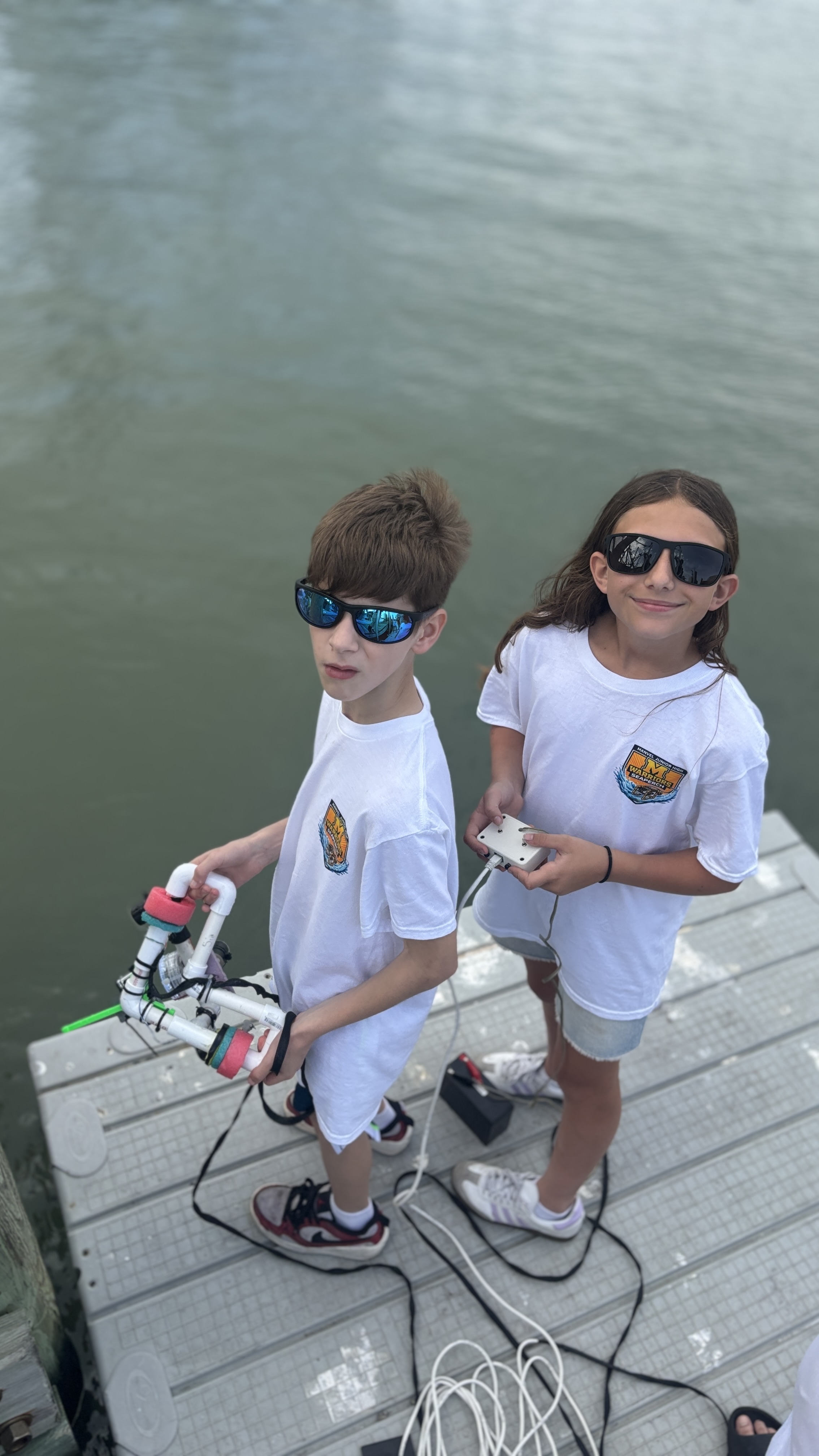
- Nolan Comparetto & Brooklynn Strickland
- Feb 17
- 3 min read
Updated: Apr 23
People love to talk about the pilot like the pilot is the whole show. We get it. The pilot is the one holding the controller. The pilot is the driver.
The truth is SeaPerch is not a solo sport. A great pilot without a great Co Pilot is like trying to drive while someone drags a rope around your tires and occasionally ties it to a mailbox. It can work, but it is going to be messy.
We wrote this together because we live this role every time our ROV hits the water.
The Big Thing People Get Wrong
I (Brooklynn) started SeaPerch a year before Nolan did. Nolan wanted to join, but he suffered a significant, traumatic injury that year and was out of school and out of commission for months. When I (Broolynn) first started, people in our district often called the tether manager the 'tether person' or the 'cord person'. It sounded like the job was just holding the wire and staying out of the way.
That is not what this role is!
Once Nolan joined SeaPerch, he started calling the driver the Pilot and the tether manager the Co-Pilot, every single time. He explained the definitions to everyone on our teams, and it made perfect sense.
A pilot is the person trained to operate and control a vehicle and is responsible for directing its movement and safe operation. A co-pilot is a second operator who works alongside the pilot, shares operational responsibilities, supports navigation and safety, and can take over if needed. That is exactly how SeaPerch works in the pool, one person (the pilot) actively controls the ROV, and the Co-Pilot manages tether, callouts, and overall run support so the vehicle can be operated safely and effectively.
That is what we were, Pilots and Co Pilots. Not driver and cord person.
What The Co-Pilot Actually Does
Co-Piloting is not just holding the tether. The Co-Pilot is mission control.
The Co-Pilot manages tether slack so it does not pull the ROV off course.
The Co-Pilot prevents snags and catches problems early.
The Co-Pilot watches position and heading; they call out hazards the pilot cannot see.
The Co-Pilot gives short, consistent callouts the pilot can actually use.
The Co-Pilot helps keep the pilot calm when adrenaline starts trying to give bad advice and forced bad decisions.
We think of it like this. The pilot is focused on the controller and the ROV. The Co-Pilot is focused on everything else.
Nolan rule: If the tether is mad, the ROV will be mad.
How The Co-Pilot Prevents The Hoop Kidnapping
We have watched an ROV get dragged sideways into a hoop like the hoop stole it and refused to give it back. Most of the time, that is tether tension. The ROV is trying to turn, but the tether is pulling it like a leash.
A strong Co-Pilot fixes that before it becomes a problem by managing slack, adjusting position on deck, and calling out what the pilot cannot see.
What Great Communication Sounds Like
The Co-Pilot is not there to narrate the entire run. The Co-Pilot is there to give short callouts that help the pilot make clean moves.
Good callouts sound like this:
Stop.
Hold.
Rotate slow.
Up a little.
Back two inches.
Straight.
Now GO.
If the Co Pilot is yelling paragraphs, the pilot’s brain overloads and the ROV bonks into something. Nobody wins.
Brooklynn tip: Using the same words every time makes the pilot faster and calmer.
Nolan tip: Short callouts beat panic speeches. This is not a movie monologue moment.
Practice The Role Like It Matters
Co-Piloting is not extra. It is a skill.
Practice managing slack without over correcting.
Practice staying calm even when the ROV hits something.
Practice reading the course and predicting what the pilot will need next.
Practice callouts until they become automatic.
A lot of teams practice only driving. The strongest teams practice Piloting and Co-Piloting together as one system.
Quick Co Pilot Checklist
These are the things we do before a run:
The tether is laid out clean, no knots, no twists.
We agree on callout words before we start.
The Co-Pilot stays ready to move with the tether and prevent snags.
We keep communication calm and clear.
Our Final Word
Piloting is teamwork. Your ROV does not care who gets credit.
The Pilot and Co-Pilot are one unit. When the Co-Pilot is respected and trained, runs get cleaner, communication gets better, stress goes down, and confidence goes up.
That is why we say it loud, because we mean it: The Co-Pilot is not optional.


Comments